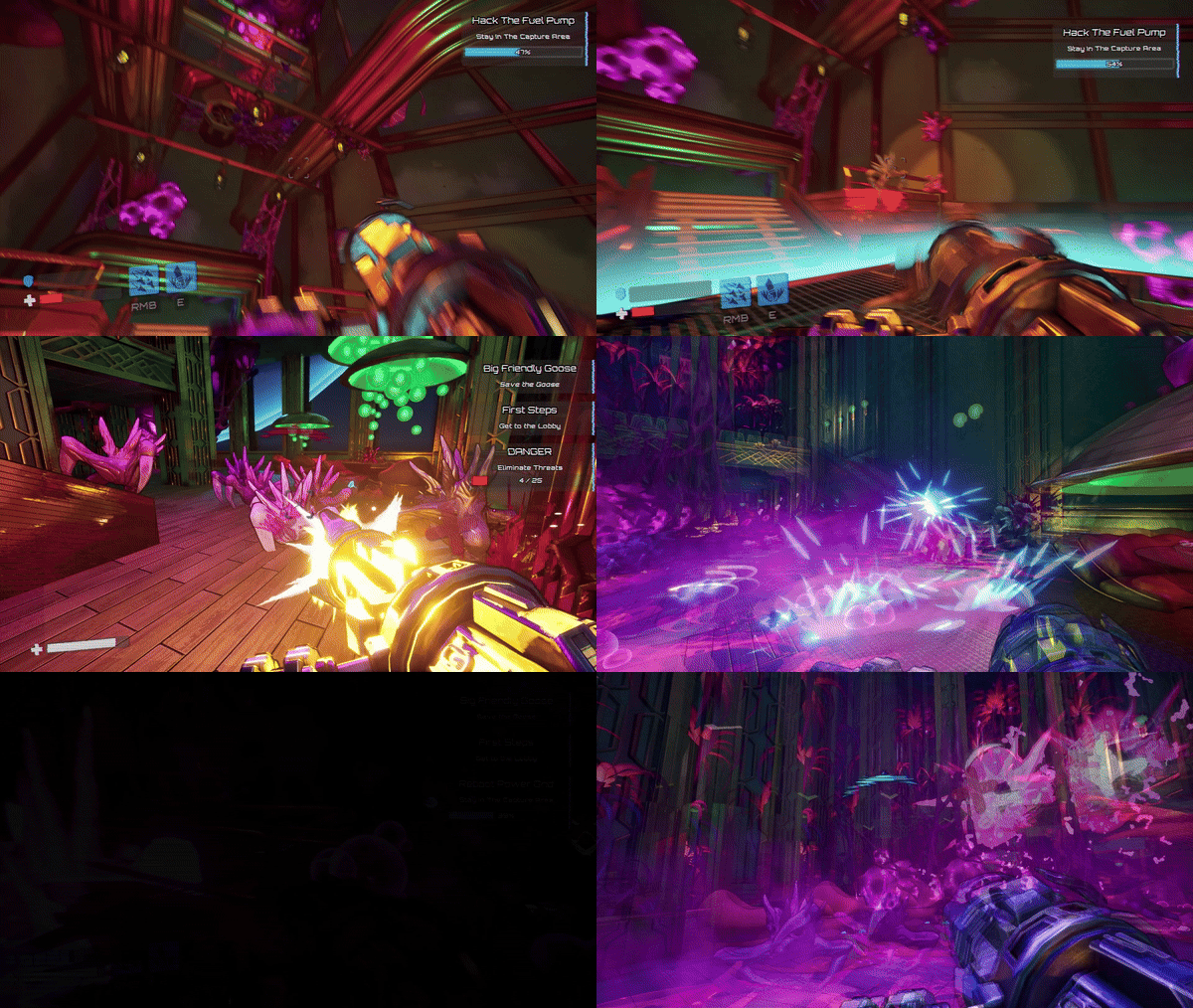

A First Person Shooter where players unleash carnage with powerful tools of destruction, fending off hordes of wall-walking enemies capable of appearing out of every corner.


23 people
32 Weeks
Unreal


PC Windows
Singleplayer
ROLE AND TASKS
Throughout the development of the game, I have been involved as a Level Designer, working on the ideation and implementation of the core gameplay spaces, encounters, level ingredients, and overall experience flow.
Designed, developed, and iterated blackouts and modular elements for multiple environments.
Designed and scripted encounters and level ingredients to support the player experience.
Supported integration of visual and gameplay, collaborating with the Environment Art team.
Gathered playtesting data, analysed, and iterated to improve and align the player experience.
Designed and Character, Camera, and Controls to support the early stages of development.
Supported production with agile development processes to meet goals within the given timeframe.
Avaliable on Steam
DESIGN PILLARS
Levels and pacing are built to provide interesting problems for players to solve on the fly, expertly adapting to the evolving gameplay situation.
ORDER TO CHAOS
Spaces, encounters, and the flow of the experience are built to guide the player towards their foes, naturally building and developing the action.
PUSH FORWARD
Encounters drive players toward fulfilling their fantasy, giving them spaces and opportunities to test, show, and appreciate their expertise with the tools.
CLEANSING
FLOW OVERVIEW
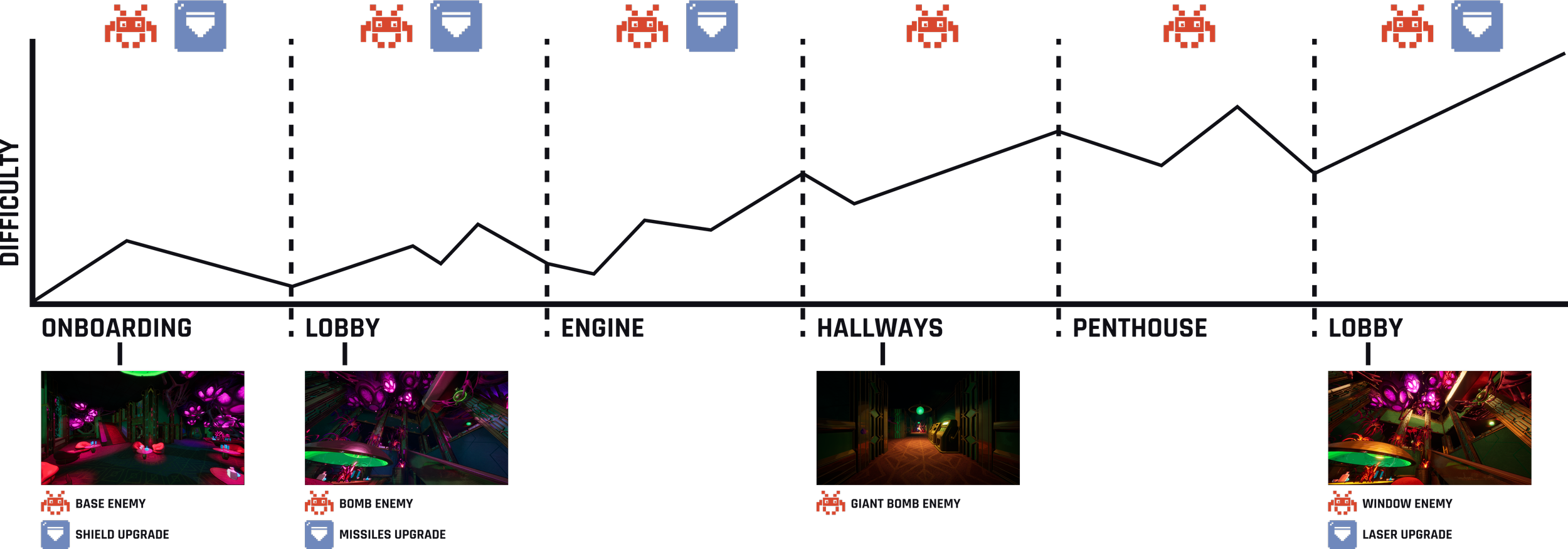
Before any work was done, the team and I sat together to plan the division of work, feature distribution across the beats, and the overall flow of the experience.
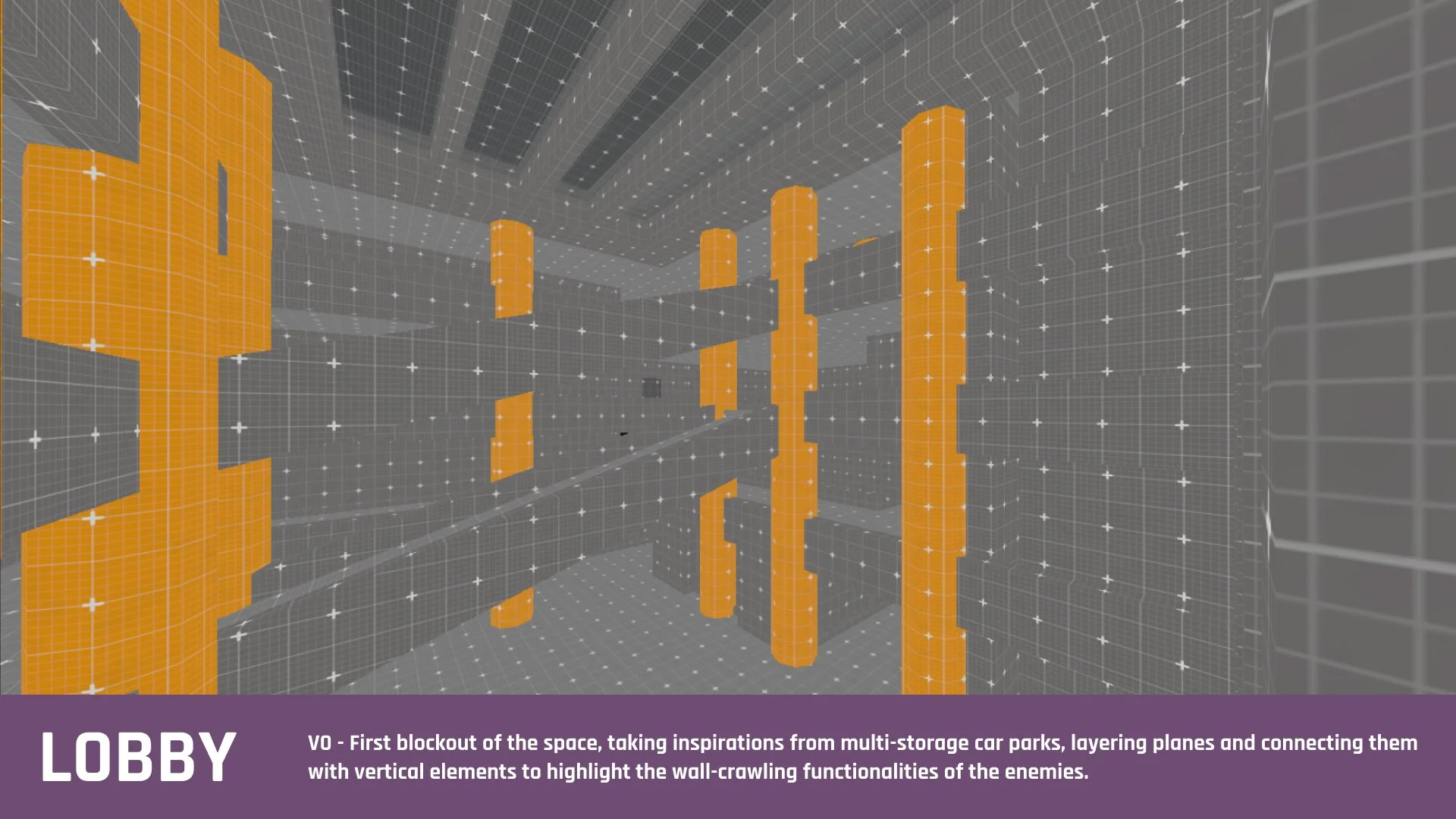
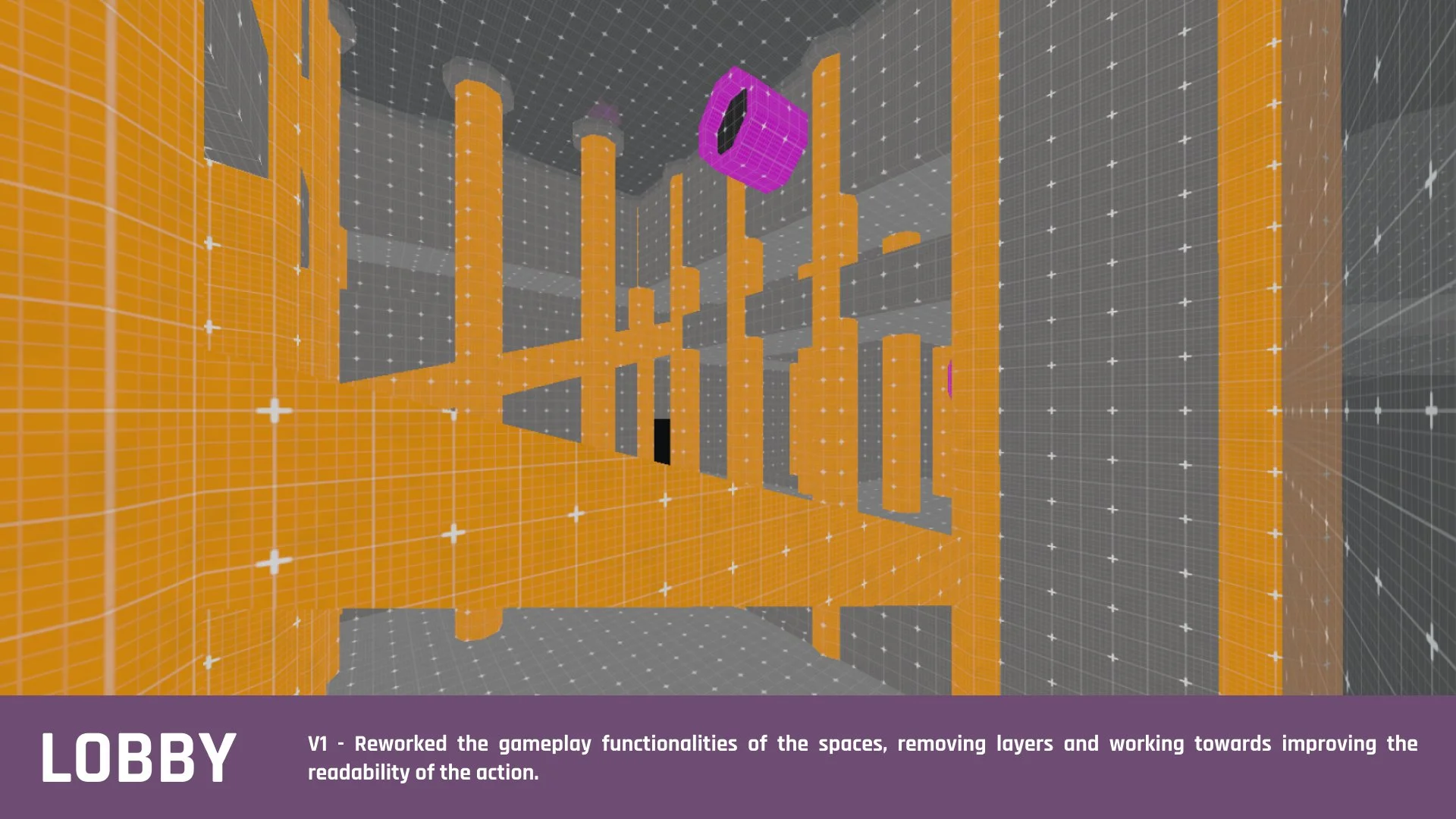
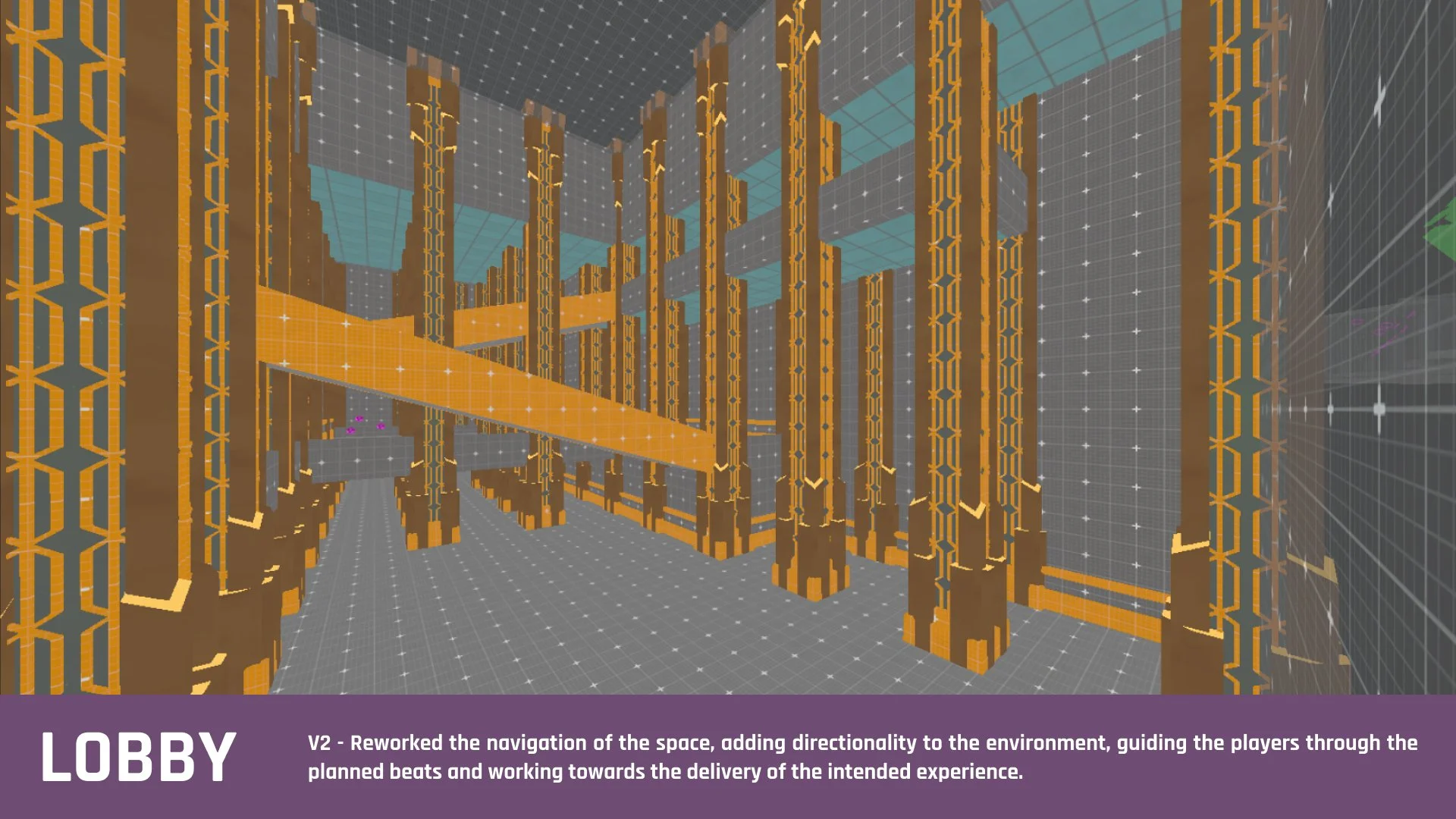
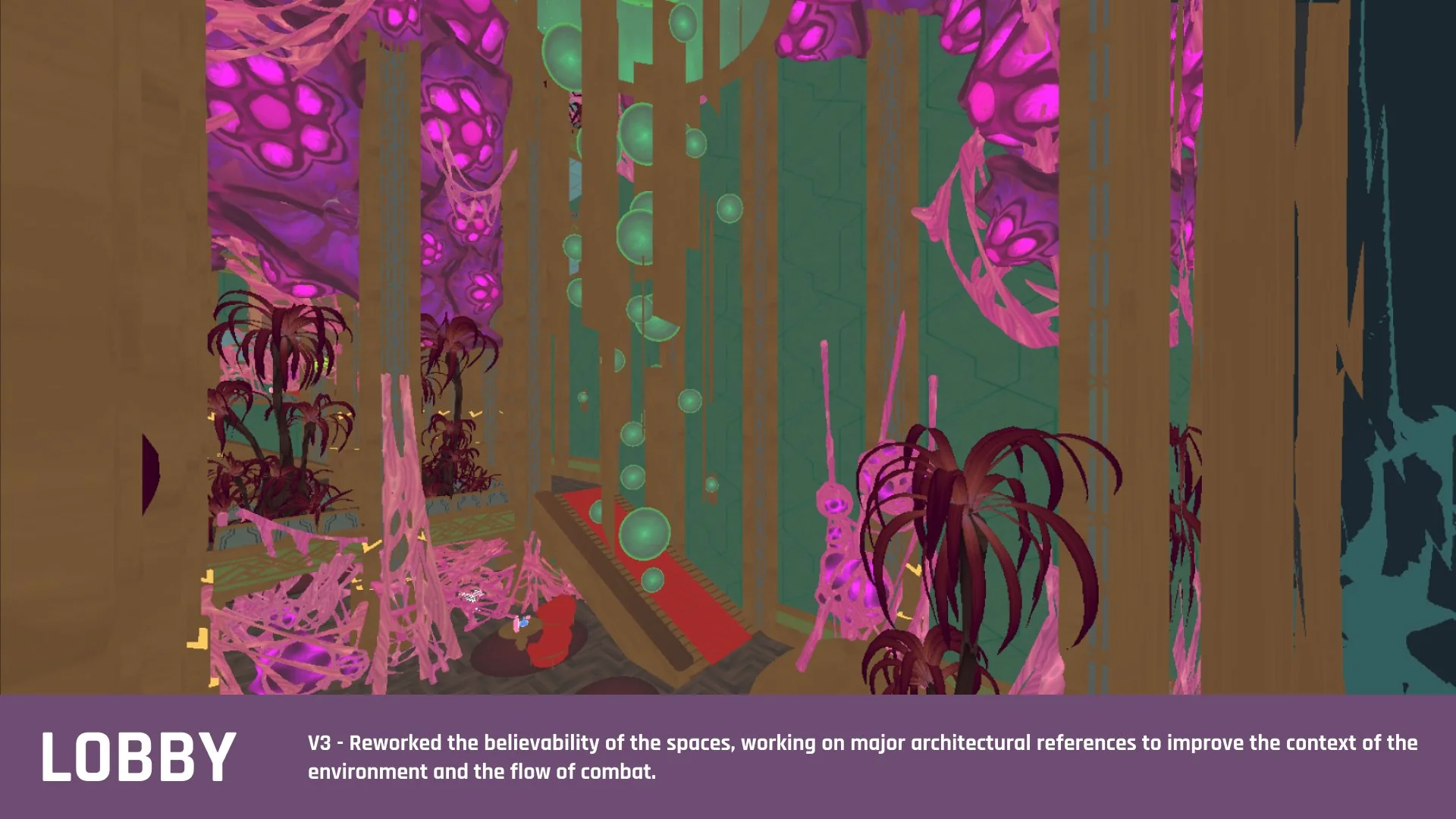
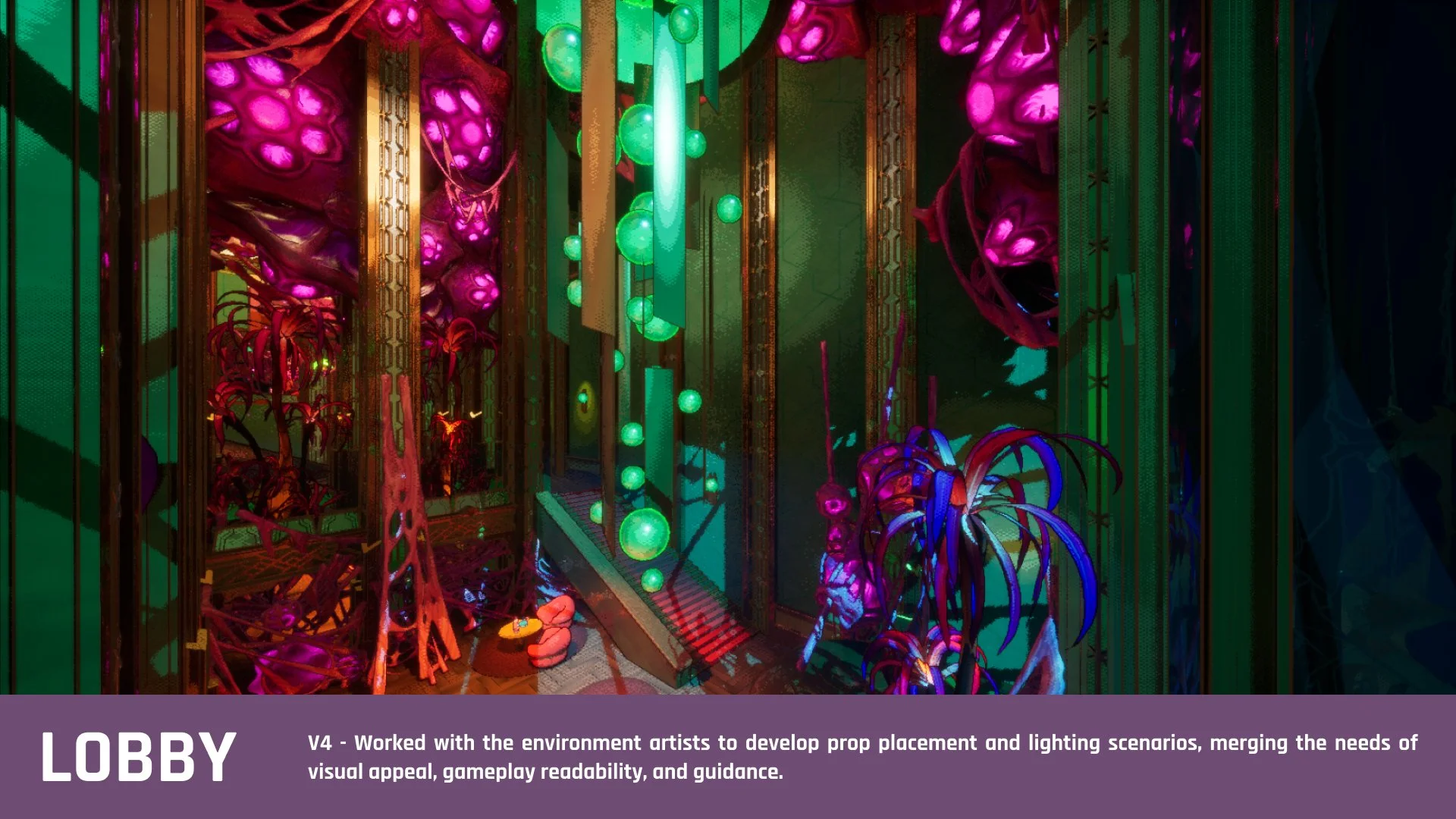
LOBBY
The first unguided gameplay beat of the game, responsible for delivering on the promises set in the onboarding and expanding the world and the experience.
As a player, I want to feel lost scanning the environment for threats.

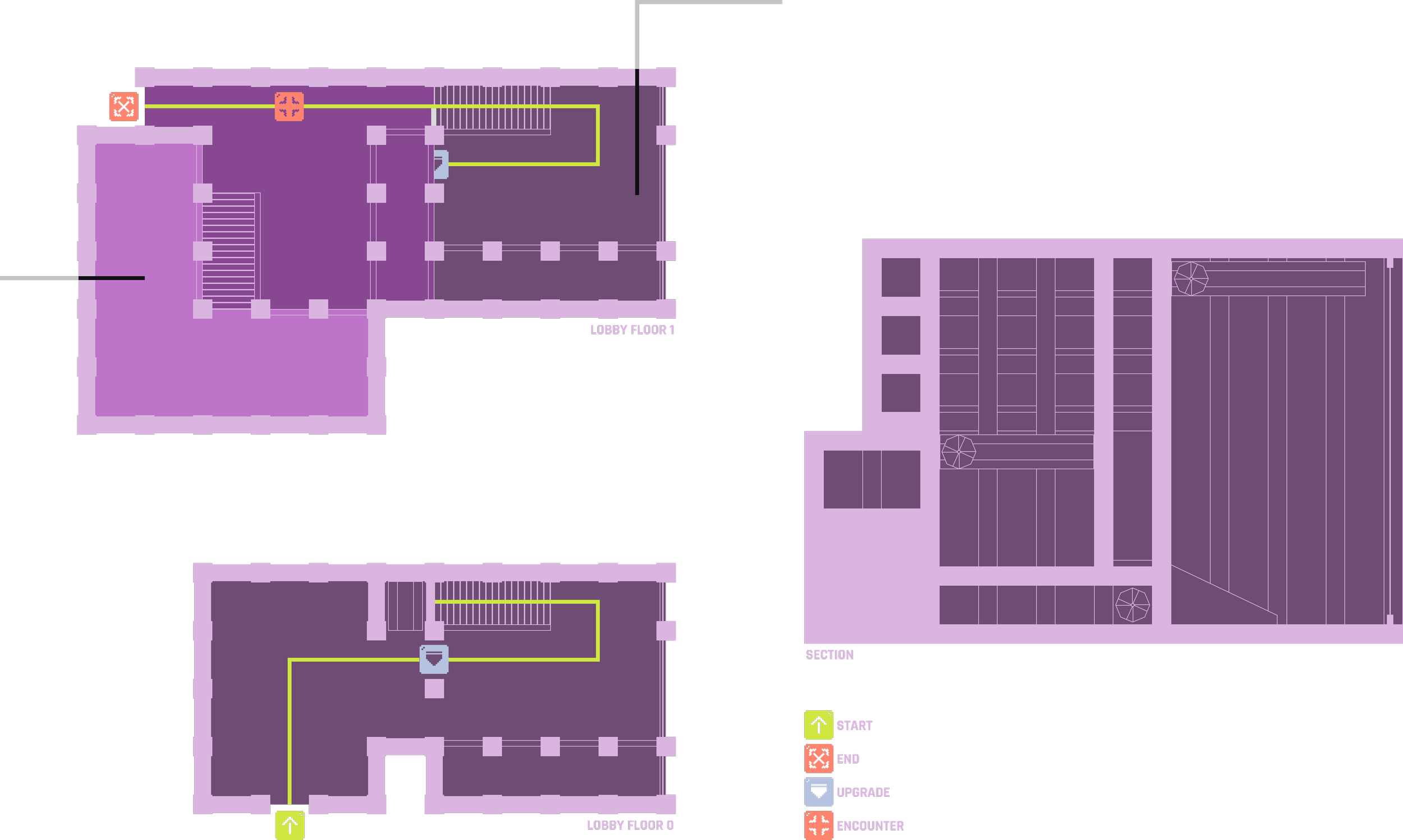
As a player, I want to feel awe and mistery for the space I am exploring.

PINCHING
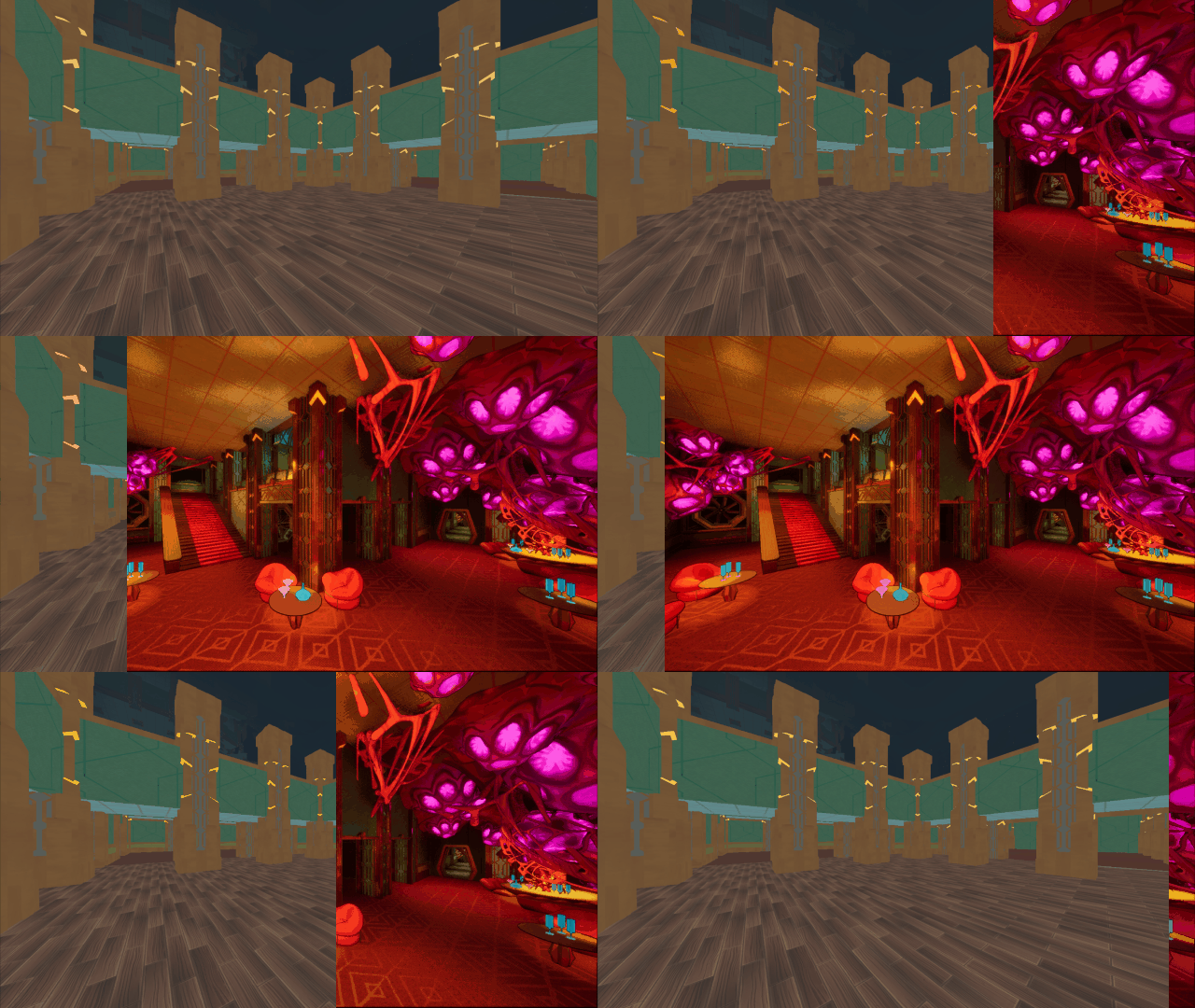
Exploit angles and leading lines to deliver the feeling of awe of the intended experience and guide the players on their path.
CURTAINS
Create visually enclosed spaces that guide the players into the intended gameplay loop without real physical constraints.
BAIT AND SWITCH
Teach players the direction they need to move towards, showing them the path before letting them in on the action.
HIDE AND SEEK
Spaces and vertical elements designed to support the wall-crawling enemies and surprise players from unconventional directions.
REVERSED FLOW
The space is reused for the final high-stakes confrontation, reversing the flow of the arenas and preparing them for additional mechanics.
NARRATIVE EXPANSION
Develop the universe of the game expanding the level beyond the reach of the players, giving believability to the environment.
HALLWAYS
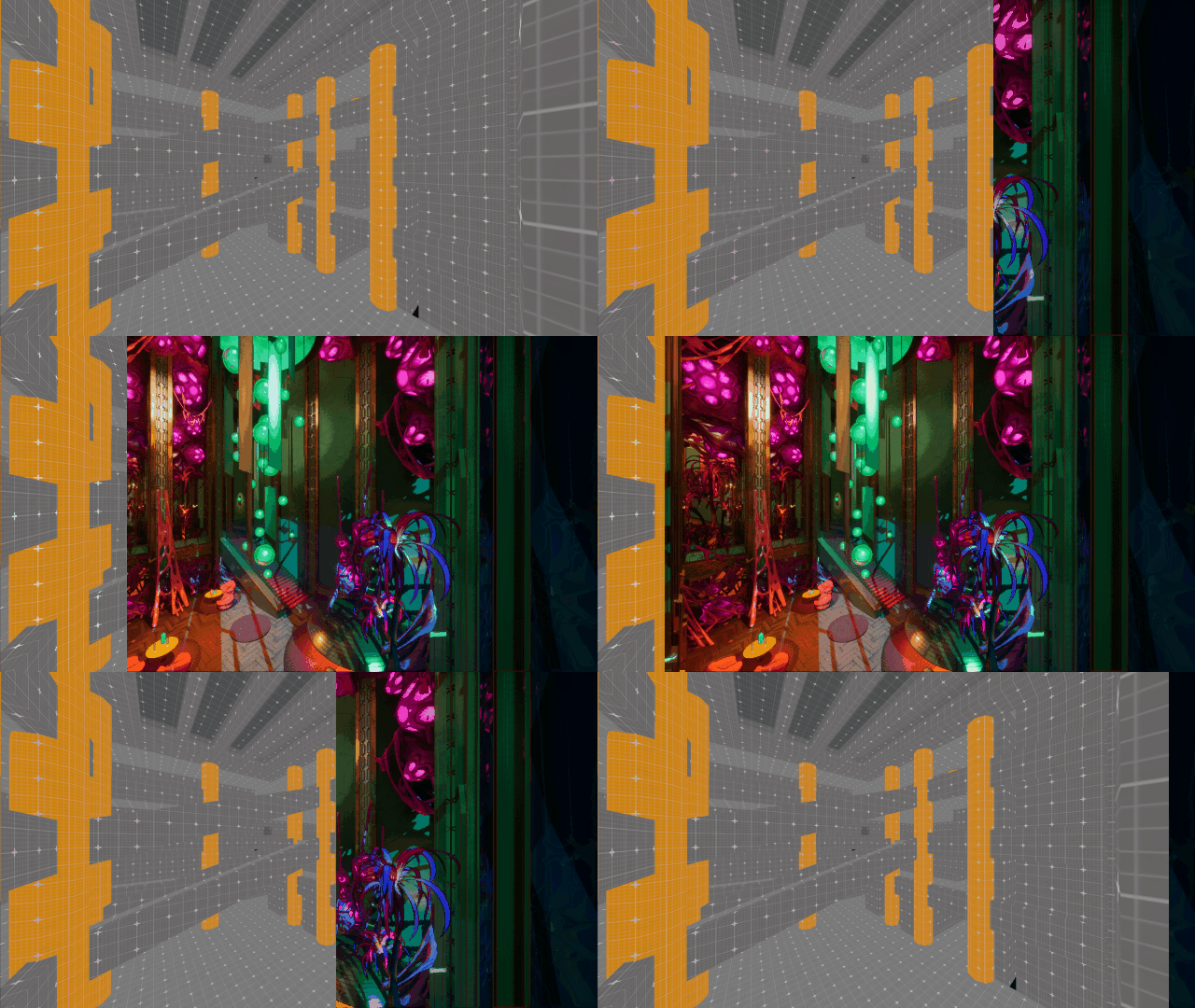
Gameplay beat designed to subvert expectations and challenge players, limiting the action space and asking them to discover new gameplay possibilities.
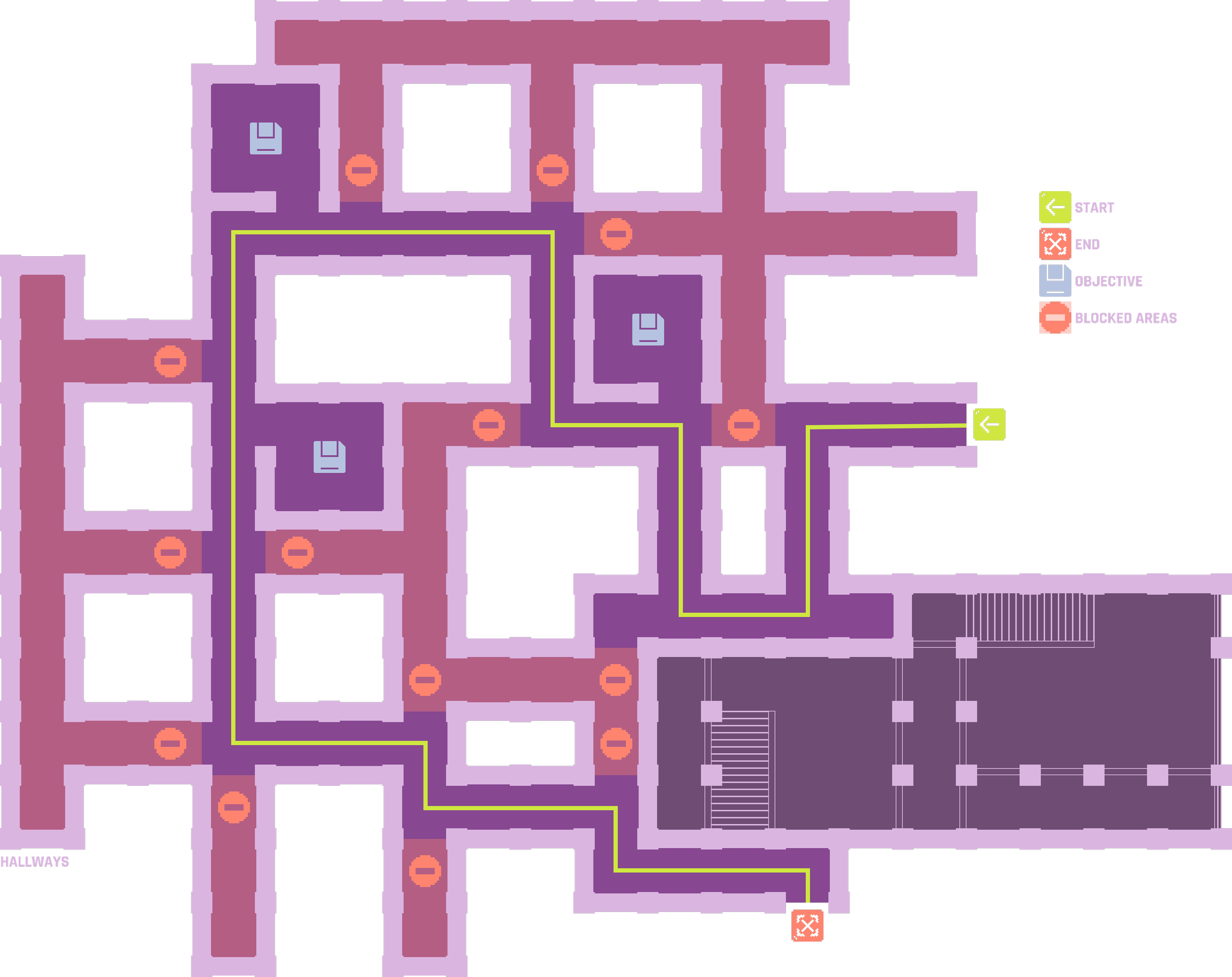
As a player, I want the feeling of getting closer and closer to the heart of the infestation.
SCALE
Used scale and metrics to enhance the scenic presence of the new threats and channel the action into chaos.
MARKERS
Repurpose the navigation markers as active gameplay elements, dynamically adapting to each playthrough.
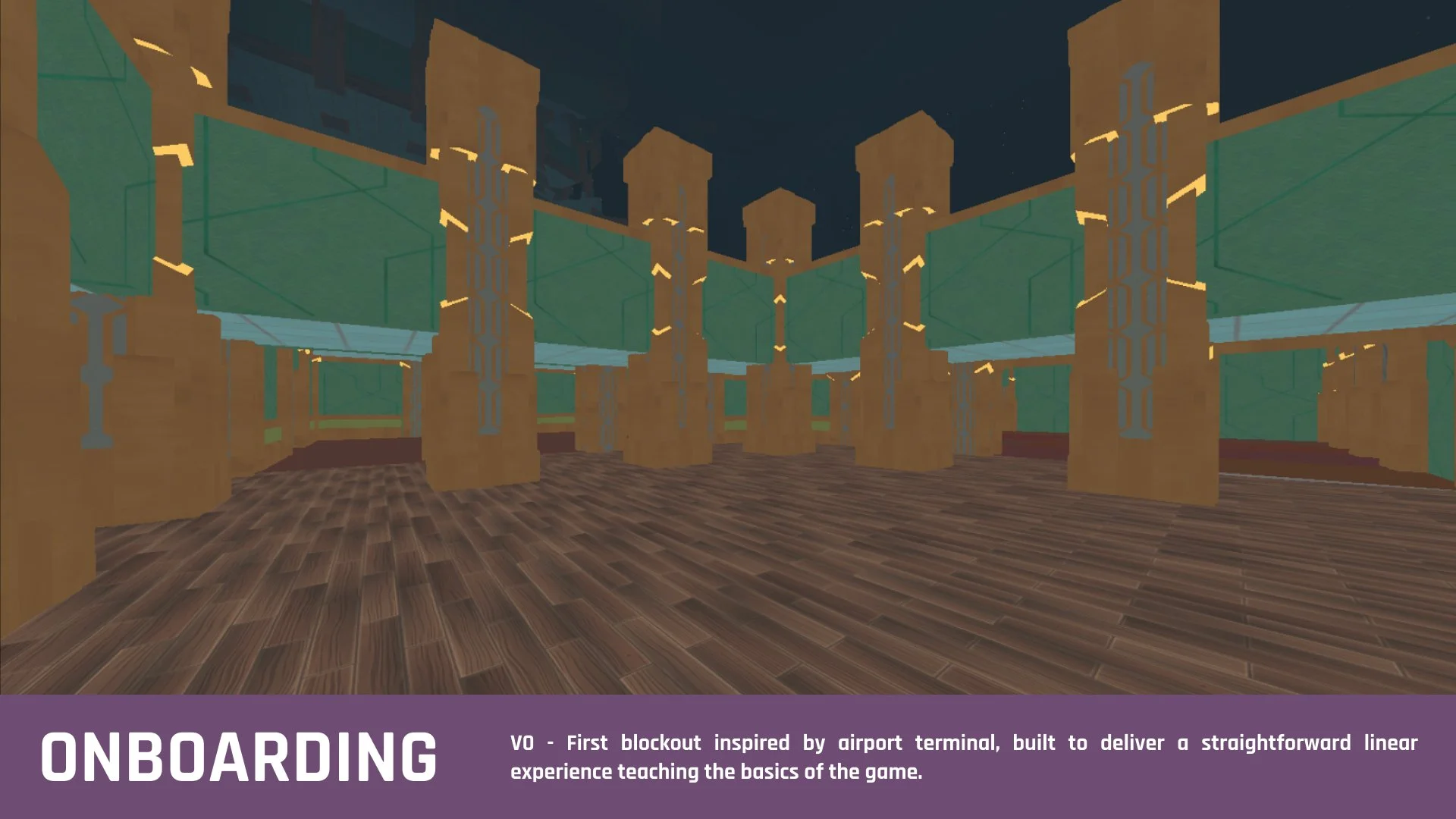
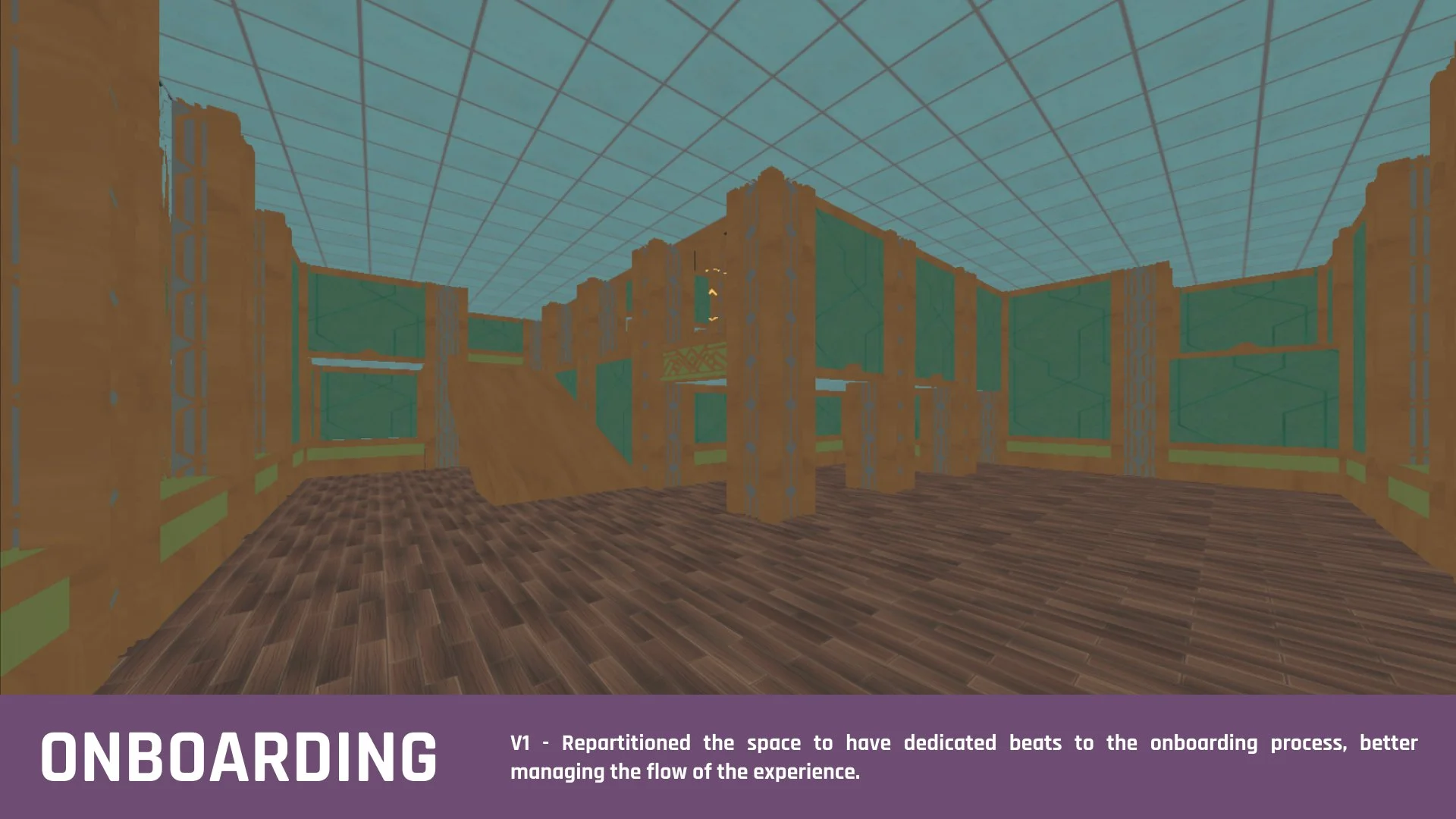
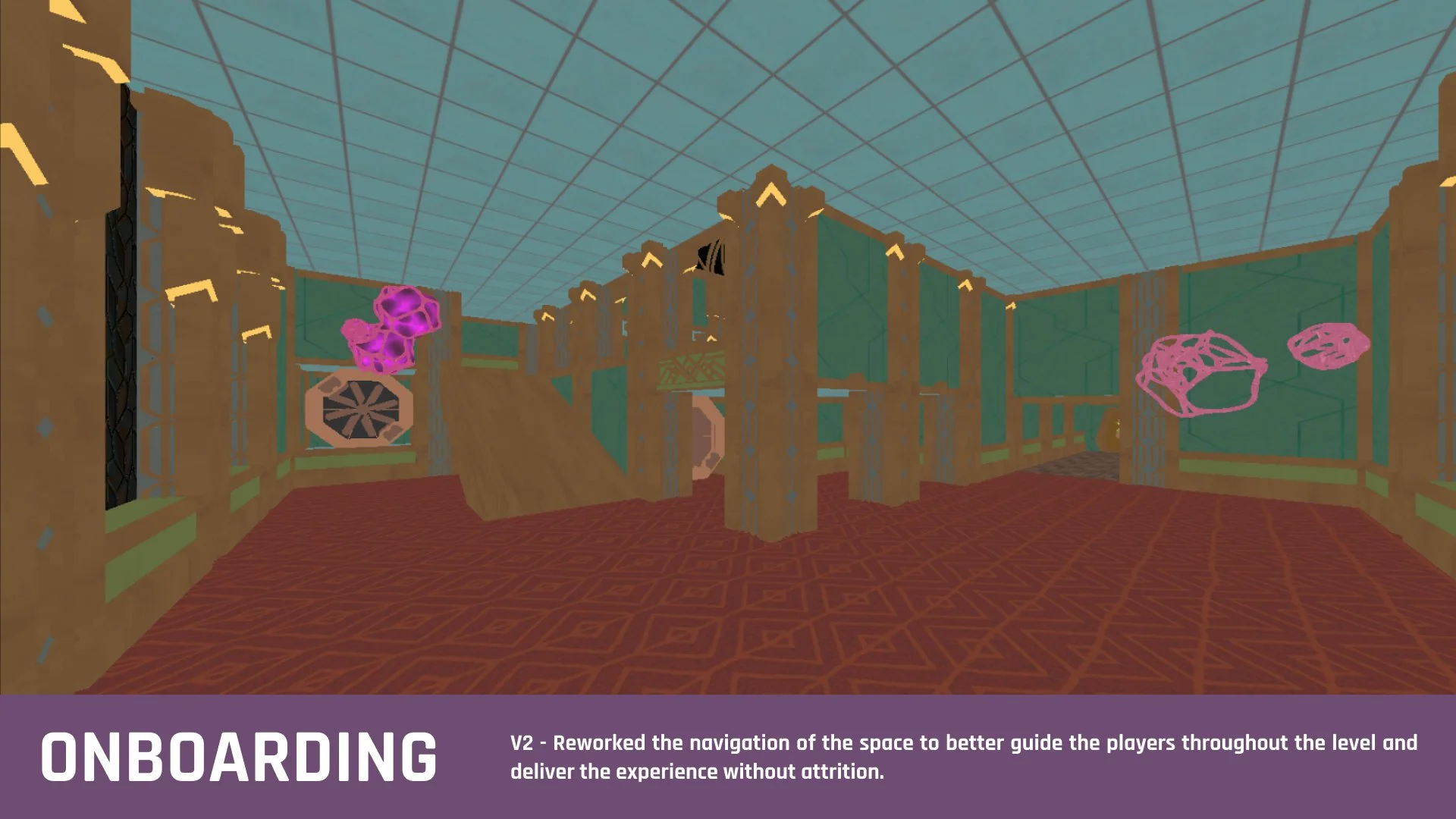
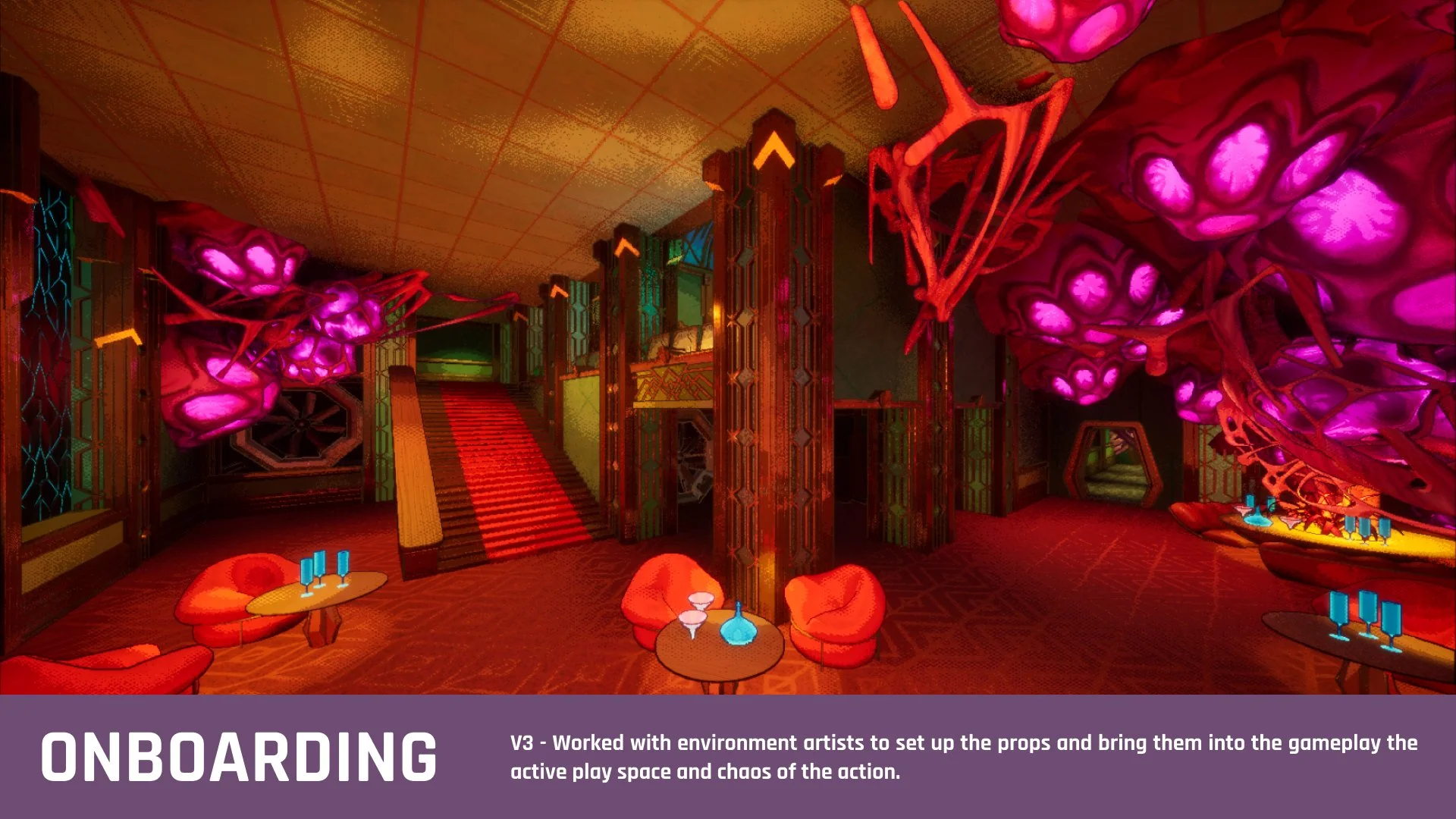
ONBOARDING
Space designed to introduce players to the experience of the game, teaching the basics and dropping them straight into the action right out of the gate.
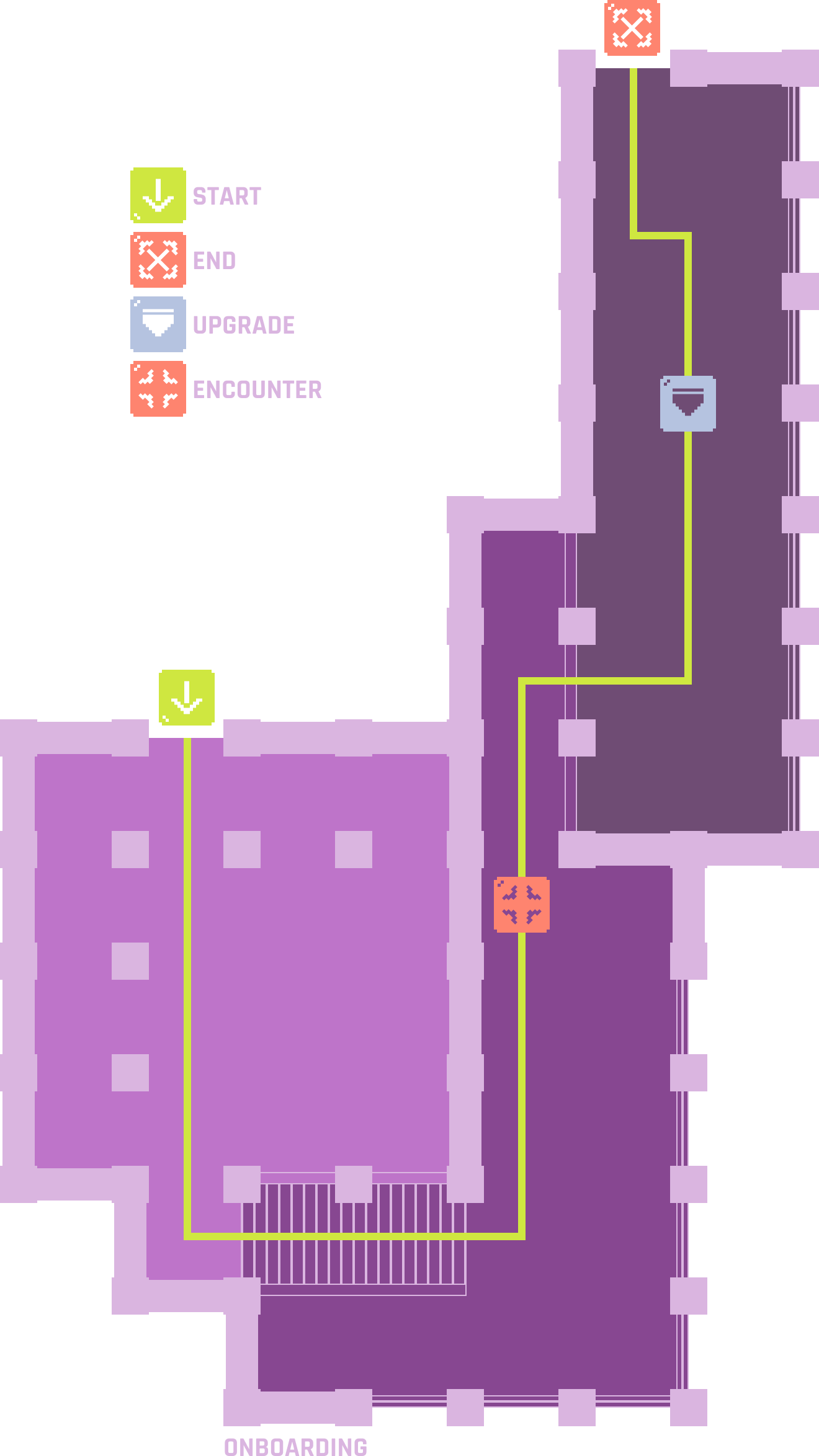
As a player, I want to feel like I have landed right in the middle of the adventure.
EXPERIENCE FIRST
The onboarding not only introduces the foundations of the game, but it also sets tone and expectations of the experience.
SHOW DON’T TELL
Developed the delivery of upgrades to showcase their effect, reinforcing the communication to players.
SYSTEMS AND TECH
PROCEDURAL CHARACTER CONTROLLER
Designed and developed a First Person Character Controller with procedural animations to allow the team to fine-tune the game feel and fully focus on the delivery of the intended player experience.
LOADING ELEVATORS
Created a system to smoothly transition between level areas loading and unloading heavy AI and Physics systems, while giving level designers ownership of connections and placement.
ENDLESS FRAMEWORK
Developed a framework repurposing the level ingredients to support a brand new gamemode, expanding the pool of content available from the same systems.

None of the work would have been possible without the incredible work of the team as a whole.
The constant process of communication and exchange with the rest of the development team, especially Environment Artists, Programmers, and Combat Designers, has been necessary to make their work shine and make them integral to the design process.
Including everyone in the iteration cycles was meant to make everyone interact with the levels and make them feel a sense of ownership in the process, pushing us to deliver the best of their work.
The strong communication developed allowed us to be conscious of each other’s progress and challenges, overcome every disagreement with a constructive attitude, and keep alignment on the player experience we aimed at delivering.
CLOSING THOUGHTS
The project has been an opportunity to develop and refine my encounter design skills, crafting gameplay beats that leverage the various systems of the game to deliver a fulfilling and cohesive player experience.
Developing encounters expanded my skills in building functional spaces for the systems to shine, bridging the gap between enemies and players through clever spawn placements, behavioural architecture, and careful iteration of the moment-to-moment action.
Everything would have been impossible without understanding the nature of the game, analysing the AIs, the player, and planning challenges into the development process, allowing us time to learn, adapt, and improve the game to deliver the best possible experience the team and the players would love.